Non court dispute resolution (NCDR) refers to the range of structured, legally recognised methods available to separating couples in England and Wales for resolving disputes without going to court. It covers both financial matters, such as how assets, property and pensions will be divided, and arrangements for children following separation.
For many people, the idea of contested court proceedings can feel overwhelming. NCDR offers a more constructive alternative, giving you and your ex-partner greater control over the outcome, often at lower cost and in less time. Our award-winning team can help you understand which approach may suit your situation and provide clear guidance at every stage.
Stowe Family Law is the UK’s largest specialist family law firm, with over 90 offices across England and Wales, including London, Manchester, Leeds, Birmingham, Sheffield, Bristol, and Cardiff. Ranked as a Leading Firm by both Legal 500 and Chambers & Partners 2026, and named in The Times Best Law Firms in 2026, our solicitors are experienced in helping separating couples reach fair outcomes – without the delays and costs of court proceedings.
What is collaborative law in the UK?
Collaborative family law is a non-court dispute resolution method where you and your ex work together with your individual collaboratively trained lawyers to reach a mutually agreeable outcome on your divorce issue.
What is the collaborative law process?
Once you and your ex have chosen an individual collaborative lawyer, you will both need to sign an agreement stating your intention to collaborate fully on finding the best solution for both parties. From here, your legal teams will work closely to avoid court proceedings whilst providing you a satisfactory outcome.
How long does the collaborative process take?
There’s no exact timetable applied to collaborative law, so the exact length of the process will depend on the complexity of your case and how easily you can reach an agreement. Some couples will only need two or three meetings, some may require more. Each session lasts about 2 hours.
Family law mediation is a voluntary and confidential process where a neutral, trained mediator helps divorcing couples negotiate agreements for legal issues such as financial settlements and child arrangements. Mediation often is a cost and time-effective way of resolving disputes compared to going through the courts. We can provide trained mediators to facilitate discussions or give you legal advice while you are going through an external mediation process.
Mediation solicitors
Collaborative divorce is an alternative to mediation and is an out of court dispute resolution method for couples to resolve issues relating to the divorce process, including financial settlements and child arrangements without litigation. Either party will have their own lawyer in a ‘four-way’ face to face meeting to reach a legally binding agreement on any disputes in the divorce process. Our trained collaborative lawyers will represent you in any meetings and provide you with legal advice to help you achieve the best outcome in your divorce.
Collaborative Family Law
Arbitration is an out of court dispute resolution process when couples can’t agree on issues that arise in divorce, such as financial settlements or child arrangements. An impartial legal expert comes in and makes decisions for the divorcing couple on any disputes, acting like a private judge. It offers a cost and time effective alternative to going through the courts and offers more flexibility for dates and location. Our expert solicitors can facilitate your arbitration and ensure you can settle any disputes quickly and effectively.
Arbitration lawyers
Divorce is the legal process of terminating a marriage, allowing a couple to separate. We offer a number of divorce services, including fixed fees and online offerings. Once divorced, you will need separate agreements for any joint finances or children had during the marriage. Our out-of-court offerings are the most time and cost-effective methods of resolving any disputes on these disputes.
Divorce solicitors
Child arrangement orders are a legal agreement that decides where the child will live and how much time they will spend with each parent. You can go through the court if you cannot come to a decision, but out of court offerings such as mediation or collaborative law offer a more time and cost-effective way to resolve any disputes. We can offer legal advice while you go through these processes, or our specially trained lawyers can represent you or mediate.
Child arrangement order solicitors
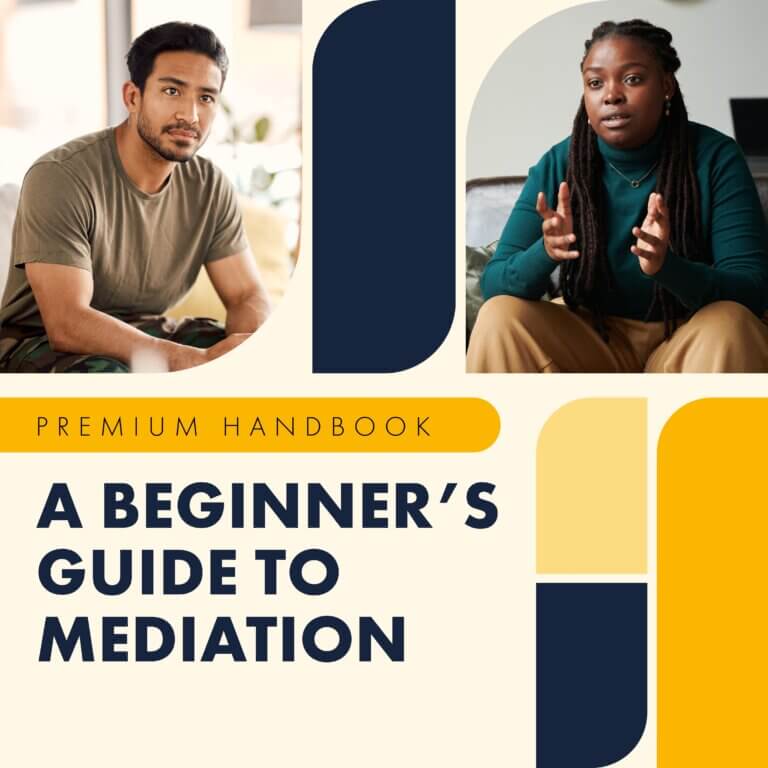
Download our free mediation guide
NCDR is the term used in England and Wales to describe the range of methods available to separating couples for resolving disputes outside the formal court process. Sometimes referred to as out of court divorce, it covers financial matters, such as how assets and debts from the marriage will be divided, as well as arrangements for children.
Following rule changes introduced in April 2024 under the Family Procedure (Amendment No 2) Rules 2023, those wishing to make a court application in financial remedy or children proceedings must now demonstrate that they have actively considered NCDR first. Failing to engage genuinely with out of court divorce may result in cost sanctions being imposed by the court.
NCDR methods available under the rules in England and Wales include:
If more than 12 months have elapsed between obtaining your conditional order and applying for your final order, you will have to submit a short statement to support your application, explaining the delay.
Get expert advice and support tailored to your situation from our experienced legal team.
Court proceedings can be lengthy. They can also be costly, stressful, and, in many cases, damaging to any ongoing co-parenting relationship.
NCDR can offer a meaningful alternative. For many separating couples, it provides a faster, less adversarial route to resolution – one that puts you in greater control of the outcome rather than leaving decisions in the hands of a judge.
The potential benefits of resolving matters through NCDR include:
That said, NCDR is not suitable for every situation. In cases involving domestic abuse, significant power imbalances, or where one party refuses to engage meaningfully or provide financial disclosure, a different approach may be needed. Our lawyers can offer guidance on which route is appropriate for your specific circumstances.
Lawyer-led negotiation is one of the most established and widely used forms of NCDR in England and Wales. It involves your solicitor communicating directly with the other party’s solicitor on your behalf, working to reach a mutually acceptable agreement on financial matters or arrangements for your children.
Unlike mediation, you do not meet with your former partner during the negotiation process. Your solicitor advocates for your interests throughout, while keeping you informed and seeking your instructions at each stage. This can be particularly helpful where direct communication between parties is difficult, or where the legal and financial issues are complex.
The process typically works as follows:
An agreed consent order, once approved by the court, is legally enforceable. It provides both parties with long-term certainty and, in the case of financial matters, a clean break from the financial ties of the marriage.
Our solicitors are experienced in negotiating financial settlements across a wide range of circumstances, from straightforward cases to those involving complex assets, business interests, or pensions. We provide clear guidance on your legal position, what a court is likely to consider a fair outcome, and what options are available to you. This way, any decisions you make are fully informed.
As the only national law firm fully dedicated to family matters, our expert team offers professional advice so you can make a fully informed decision about your divorce.
We are proud to be rated ‘Excellent’ on Trustpilot. Check out our reviews to see what our previous clients have said about our service.
We feature in The Legal 500 rankings and are fully authorised and regulated by the Solicitors Regulation Authority (SRA).
We keep you informed. Take a look at our support section, which features a range of helpful guides, focusing on important topics including finances and mediation.


Yes, in many cases the two processes can run alongside each other or in sequence. You may, for example, use mediation to reach broad agreement on the key issues, and then instruct your solicitor to formalise that agreement and handle any remaining points through direct negotiation. Your lawyer can advise you on how best to combine different NCDR approaches depending on how your situation develops.
Lawyer-led negotiation may not be suitable where one party refuses to provide honest and complete financial disclosure, or where there is an urgent need for court intervention. For example, this could be to protect assets from being purposefully moved or disposed of, or to obtain an emergency order relating to children.
In these situations, a different form of NCDR or court proceedings may be more appropriate. Our solicitors will discuss your circumstances with you and offer guidance on the most suitable approach.
Lawyer negotiation can take place alongside any of the other dispute resolution methods you and your ex are engaging with. For example, you may be going to mediation sessions, but in between these sessions your individual solicitors can advocate on your behalf in negotiation and advise on your position.
Some couples also maintain lawyer negotiation when their case is going through the court process, as it is a more cost-effective method of reaching agreements, whilst having a court-timetable in place to ensure matters are resolved in a timely matter.
If negotiation does not result in a settlement, you still have options. You may choose to try a different form of NCDR, such as mediation, a Private FDR, or arbitration. If all out-of-court options have been exhausted or are not suitable, you can make an application to the court.
Our lawyers will support you through whichever route is right for your situation, and can represent you in court proceedings if that becomes necessary.
Sign up for advice on divorce and relationships from our lawyers, divorce coaches and relationship experts.
Privacy Policy Close newsletter modal